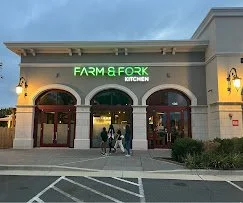
Farm & Fork Kitchen
42755 Creek View Plaza Unit #100,
Ashburn, VA
20147
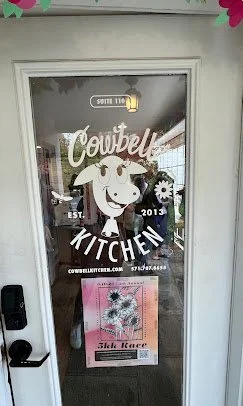
Cowbell Kitchen
26 N King St Suite 110,
Leesburg, VA
20176
Co-Creating Our CountyLoudoun County has a strong recycling program with an effective recycling rate of 36% per year, compared to Virginia’s overall rate of 25%, according to the Virginia Annual Recycling Summary Report for 2021. Recycling metal, paper, cardboard, plastic, and glass bottles is an important and effective component of Loudoun’s waste management service. Loudoun County has added an awareness component to their recycling efforts through the adoption of a 5-cent plastic bag tax, as reflected in a highlighted section of the 2023 Loudoun County Energy Strategy Report, resulting in shopper divergence onto the road of “Culture Change” and an increased diversion of plastic bags as a “Solid Waste” from county landfills, but there is little collection of compostable organic matter, and this deficiency needs to be corrected. Taking action to increase the collection of compostable organic matter in conjunction with current county recycling efforts has the potential to increase Loudoun County’s overall effective recycling rate and reduce county landfill gases like methane and carbon dioxide.
Diverting Food Waste In Loudoun CountyLoudoun businesses and residents have a wonderful opportunity to collaboratively reduce wastefulness by redirecting organic materials away from landfills to composting facilities. County organizations could substantially aid accomplishment of that goal. For example, the chambers of commerce could advocate that their members engage in, or promote, composting. The Virginia Master Gardeners and Loudoun Master Gardeners, avid proponents of composting, make speakers on the subject available to home gardening groups. Other non-governmental organizations and the County itself could provide training opportunities demonstrating how to make compost work. Such measures should enable tracking of Loudoun’s waste diversion rate, and with a dedicated populace, ultimately attain the status of zero-waste community. Just the efficient transformation of food waste, a useless, burdensome entity, to compost, a valuable, useful product, is reason enough to pursue the process. But, as noted, there are other highly significant reasons for composting in the form of tangible benefits to the economy and environment. With public participation and support, all these benefits can be realized. There is no downside to composting.